Laboratory furniture, as essential infrastructure for scientific research and testing, directly impacts the efficiency, safety, and environmental control of laboratory operations. High-quality laboratory furniture must not only meet basic load-bearing and durability requirements but also meet high standards in chemical resistance, cleanliness, and ergonomic design. This article systematically analyzes the core performance indicators of laboratory furniture from the perspectives of material science, functional adaptability, and long-term reliability.
1. Material Performance: Corrosion Resistance and Structural Stability
The fundamental performance of laboratory furniture depends on the properties of its materials. Worktops exposed to acidic and alkaline reagents are typically made of epoxy resin, solid-state chemically treated board, or stainless steel. These materials must be certified to ASTM D1308 (chemical corrosion resistance test) or EN 14190 (epoxy board standard) to ensure they will not expand, crack, or discolor after long-term exposure to organic solvents or strong acids. Metal frames are typically constructed of grade 304 or 316 stainless steel, with corrosion resistance requirements meeting ISO 9227 neutral salt spray testing standards for ≥500 hours to withstand high humidity or hazardous gas environments. Furthermore, the load-bearing capacity of furniture connectors must undergo dynamic load testing (e.g., EN 14074) to ensure no structural deformation when fully loaded with instruments.
2. Functional Design: Adapting to the Needs of Different Laboratory Scenarios
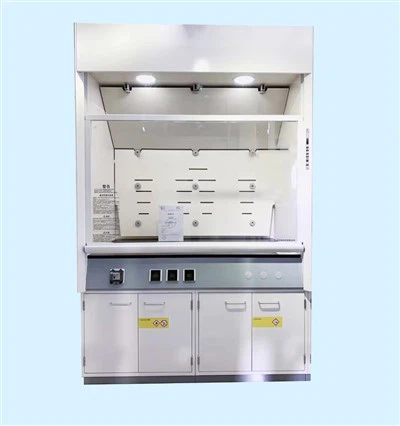
The performance of laboratory furniture is closely related to its functional suitability. For example, the air velocity at the hood of a fume hood must be stable within the range of 0.4-0.6 m/s (according to SEFA 1-2010) to effectively remove toxic vapors. Biosafety cabinets must maintain cleanliness levels of ISO 14644-1 Class 5 and have a HEPA filter integrity test interface. For precision instrument platforms, the seismic foundation should have a natural frequency below 5 Hz and pass vibration attenuation testing (e.g., ASTM D4169). Furthermore, the interface compatibility of modular furniture (e.g., ISO 3864 safety signage integration) is a key indicator of its flexibility.
3. Environmental Adaptability: Cleanliness and Sustainability
Modern laboratories place higher demands on furniture for environmental control. Cleanroom-specific furniture must have a surface roughness of ≤ Ra 0.8μm (according to ISO 14644-5), and edges must be seamlessly welded to prevent particle accumulation. Regarding environmental performance, formaldehyde emissions of E1 or lower (in compliance with GB 18580), a recyclable material content (recommended ≥ 60%), and low VOC emissions (e.g., Greenguard Gold certification) have become internationally recognized benchmarks. In durability testing, the number of wear revolutions (Taber test ≥ 1000) and scratch resistance (pencil hardness ≥ HB) of the furniture surface directly impact its lifecycle cost.
4. Ergonomics and Safety
Ergonomic laboratory furniture can improve work efficiency by reducing operator fatigue. For example, height-adjustable workstations (adjustable range 700-1000mm) must meet EN 527 standards, while the installation height of emergency eyewash stations (800-1100mm above the ground) and the faucet response time (≤1 second) are directly related to emergency safety. Regarding fire resistance, furniture materials must meet the combustion rating of GB 8624 B1 (flame-retardant materials) and maintain structural integrity in high-temperature exposure tests (e.g., UL 94 V-0 standard).
Conclusion
The performance evaluation of laboratory furniture is a systematic project that intersects multiple disciplines, including materials science, mechanical engineering, and biosafety. From the physical and chemical properties of basic materials to functional integration in complex scenarios, every performance indicator must be verified through rigorous standardized testing. In the future, with the development of intelligent laboratories, furniture's IoT compatibility (such as sensor integration) and energy management performance (such as LED lighting linkage control) will also become new performance evaluation dimensions. Selecting furniture solutions that comply with international standards and are suitable for specific experimental needs is a fundamental prerequisite for ensuring the quality of scientific research.