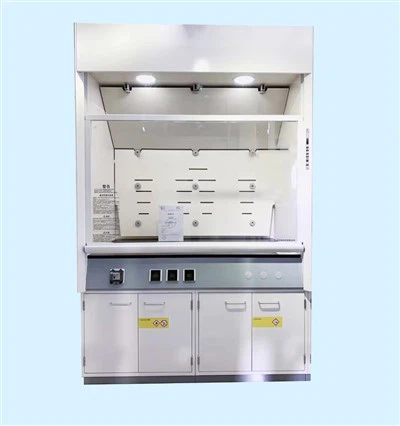
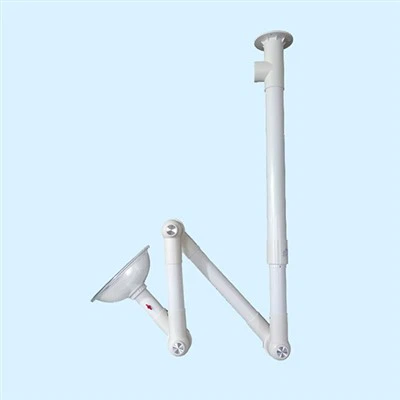
Laboratory fume hoods are essential safety equipment in modern laboratories. Their core function is to effectively remove harmful gases, vapors, dust, or smoke generated during experiments by controlling the direction of airflow, thereby protecting the health of laboratory personnel, preventing environmental pollution, and ensuring the accuracy of experimental results. With the continuous advancement of science and technology, fume hood design and technology are constantly being optimized to meet higher standards of laboratory safety.
Basic Principles and Classifications of Fume Hoods
The operating principle of a fume hood is based on directional airflow control. This involves using a fan system to create a negative pressure environment within the hood, allowing outside air to flow in through the operating window, carrying harmful substances generated within the hood and then being filtered or directly exhausted to the outside. Fume hoods can be divided into several types based on different usage scenarios and functional requirements:
1.Standard fume hoods: Suitable for most chemical experiments, providing basic protection against harmful gases.
2.Ductless fume hoods (filtering fume hoods): Utilize high-efficiency filters (such as activated carbon or HEPA filters) to purify the air, eliminating the need for external exhaust ducting. They are suitable for low-risk experiments or laboratories with limited space.
3.Radioactive Fume Hoods: Designed specifically for handling radioactive materials, they typically feature more stringent containment and multiple filtration systems.
4.Biosafety Fume Hoods: Used for biological experiments, they prevent the release of microorganisms while protecting operators and samples.
Key Technologies and Safety Standards for Fume Hoods
Modern fume hood designs integrate fluid dynamics, materials science, and automated control technologies to ensure optimal airflow stability and safety. Key performance indicators include:
•Surface velocity control: Typically maintained at 0.5-0.7 m/s to ensure effective capture of hazardous gases while avoiding turbulence caused by excessively high air speeds or gas escape caused by excessively low air speeds.
•Airflow Balance: Optimizing the layout of air inlets and outlets ensures uniform airflow distribution within the hood, minimizing dead spots.
•Noise and Energy Optimization: Using low-noise fans and energy-efficient motors reduces disturbance to the laboratory environment and reduces operating costs. In addition, fume hoods must comply with international safety standards, such as the US ASHRAE 110 test, the EU EN 14175 series, and China's GB/T 16297, to ensure their reliability under various experimental conditions.
Proper Use and Maintenance of Fume Hoods
While fume hoods can significantly improve laboratory safety, their effectiveness is highly dependent on proper use and maintenance by operators. Key considerations include:
1.Operational Standards: Lab workers should avoid rapid arm movements or blocking vents to prevent disrupting airflow balance. Furthermore, operations should be concentrated in the center of the fume hood to maximize protection.
2.Regular Inspections: Laboratories should regularly conduct face velocity tests, smoke visualization inspections, and filter efficiency assessments to ensure fume hoods are in optimal working condition.
3.Daily Maintenance: This includes cleaning the interior walls, checking the integrity of seals, lubricating guide rails, and calibrating the control system to extend equipment life and maintain safety performance.
Future Trends
With the promotion of intelligent and green laboratory concepts, fume hood technology is evolving towards greater efficiency and environmental friendliness. For example, the application of Internet of Things (IoT) technology enables fume hoods to monitor airflow parameters in real time and automatically adjust fan power. Their modular design allows for flexible adaptation to diverse experimental needs. Furthermore, energy-efficient fume hoods further reduce a laboratory's carbon footprint by optimizing exhaust strategies and utilizing renewable energy sources.
Conclusion
Laboratory fume hoods are not only a crucial barrier to scientific research safety but also a reflection of modern laboratory management. Through scientific selection, standardized operation, and continuous optimization, fume hoods can provide reliable protection for researchers while promoting an efficient and sustainable laboratory environment. In the future, as technology continues to advance, fume hoods will continue to play a key role in ensuring laboratory safety and advancing scientific research.