Agricultural product testing laboratories serve as essential platforms for food safety supervision, agricultural scientific research and third-party testing services. Such laboratories feature extensive testing items, long operational workflows and high risks of cross-contamination. Minor flaws during design and construction frequently lead to rework, failed acceptance inspections or delays in qualification accreditation. This article sorts out core decision points for agricultural product testing laboratory construction from six dimensions: positioning, functional zoning, ventilation, environmental control, equipment selection and qualification certification.
1. Clarify Laboratory Positioning: Determines All Subsequent Design Directions
Before construction begins, one core question must be confirmed: Who will the laboratory serve? Construction priorities vary significantly for different end users.
- Agricultural research institutes and universities: Focus on research method development, flexible space layout and deployment of high-end analytical instruments.
- In-house enterprise testing centers: Prioritize raw material quality control, stable operational workflows and full data traceability.
- Third-party testing laboratories: Must target ISO 17025 accreditation, with emphasis on standardized operation, stability and test reproducibility.
Ambiguous positioning often results in improperly sized functional zones, mismatched equipment specifications and unclear certification roadmaps. Therefore, a written demand specification should be formulated and jointly confirmed by end users, quality management departments and the project team at the initial stage.
2. Functional Zoning: Unidirectional Sample Workflow as the Core Principle
Functional zoning shall be arranged surrounding sample circulation. Standard zones are listed below:
- Sample Reception Area: For registration, coding, temporary storage and visual inspection. It is recommended to locate this zone near the entrance and equip refrigeration facilities.
- Sample Pretreatment Area: Used for crushing, homogenization, digestion, extraction, concentration and other high-volume operations.
- Physicochemical Testing Area: Conduct routine analysis for moisture, ash content, protein, fat and other indicators.
- Microbiological Testing Area: Requires the strictest cleanliness standards, equipped with independent air conditioning and pressure differential control systems.
- Instrumental Analysis Area: Accommodates GC, HPLC, GC-MS, atomic absorption spectrometers and other large-scale analytical instruments.
- Data Processing Area: For report compilation, review and document archiving.
- Auxiliary Areas: Hazardous material storage room, gas cylinder storage room, waste liquid temporary storage room, washing room and change rooms.
The ideal unidirectional sample workflow is: Reception → Pretreatment → Routine Testing → Instrumental Analysis → Report Issuance. Strict separation shall be implemented between tested and untested samples, as well as clean and contaminated zones.
3. Ventilation System: Independent Exhaust Is Mandatory Rather Than Optional
Large volumes of organic solvents, acids and alkaline reagents are utilized during agricultural product testing. Ventilation design directly safeguards staff safety and ensures reliable test results.
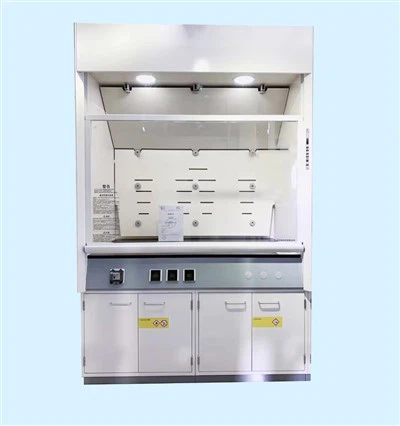
- The pretreatment area shall be equipped with heavy-duty fume hoods, with minimum air change rate of 12 times per hour.
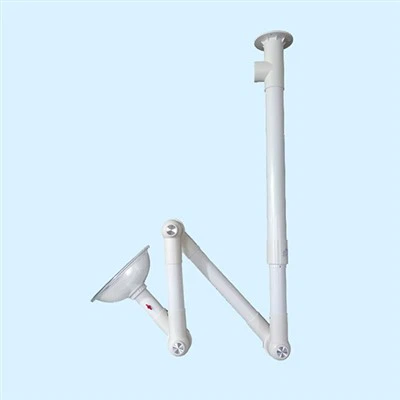
- Dedicated flexible extraction arms shall be installed for atomic absorption, atomic fluorescence and similar instruments, with exhaust discharged directly outdoors.
- The microbiological testing area shall adopt independent air supply and exhaust systems to avoid airflow cross-contamination with other zones.
It should be specially noted that areas for organic solvent handling, acid-base operations and microbiological testing shall not share exhaust ducts or fans. Different zones generate different types of pollutants; shared pipelines easily trigger cross-contamination and airflow turbulence.
4. Environmental Control: Meet Requirements for Temperature, Humidity, Cleanliness and Illumination
Precision instruments are highly sensitive to temperature and humidity fluctuations.
- For instrumental analysis areas: Temperature shall be maintained at 20℃±2℃, relative humidity at 50%±5%, supported by independent constant temperature & humidity HVAC systems.
- Microbiological testing areas generally require Class 10,000 or Class 100,000 cleanliness levels. Antibacterial color steel panels are recommended for walls and ceilings, while seamless PVC or epoxy flooring shall be adopted to facilitate disinfection.
- Illuminance inside laboratory areas shall not be lower than 300 lx, and supplementary local lighting can be arranged on workstations for precise operations.
- Dedicated power supply, grounding and voltage stabilizers are required for large analytical instruments to prevent measurement deviations caused by voltage fluctuations.
5. Equipment & Furniture Selection: Match Actual Capacity, Avoid Excessive Over-Investment
Core equipment for agricultural product testing laboratories includes gas chromatographs, GC-MS systems, liquid chromatographs, atomic absorption spectrometers, atomic fluorescence spectrometers, ICP-MS, biological safety cabinets, laminar flow cabinets, autoclaves and constant temperature incubators. Equipment selection shall match testing scopes, sample throughput and future expansion plans; blind pursuit of high-end configurations is not recommended.
For laboratory furniture:
- All-steel lab benches are preferred due to excellent corrosion resistance and high load capacity.
- Fume hoods can be selected from all-steel or PP types based on applied reagents.
- Organic solvents must be stored separately inside fireproof and explosion-proof cabinets; dedicated acid and alkali storage cabinets shall be used for corrosive chemicals.
- Anti-vibration balance tables are required for precision analytical balances.
- Gas cylinders shall be placed inside independent storage rooms. Combustible and oxidizing gases must be stored separately, fitted with gas leakage alarm detectors.
6. Waste Liquid Treatment & Qualification Accreditation: Planning Cannot Be Delayed Until Completion
Waste liquid generated during agricultural product testing contains complex components including organic solvents, acid and alkali mixtures, heavy metal contaminants and cyanide-containing waste. Classified collection is stipulated by environmental regulations, and it is also a key audit item during ISO 17025 assessments. The waste liquid temporary storage room must have anti-seepage treatment, fitted with classified collection containers and spill containment trays. Hazardous waste shall be transferred periodically to licensed disposal service providers.
If the laboratory intends to issue test reports for external customers, it needs to apply for ISO 17025 accreditation. Preparation work should start during construction to satisfy the following requirements: Laboratory space matches the declared testing scope; environmental conditions comply with relevant standard specifications for all testing items; all instruments are verified or calibrated; test methods adopt current valid international or industry standards; the quality management system shall operate for a minimum of 3 months.
Summary
The construction of agricultural product testing laboratories covers multiple engineering disciplines and requires systematic design and overall planning. Every procedure, from laboratory positioning and sample workflow layout, independent ventilation design, environmental parameter control, equipment procurement to waste liquid management, determines successful project acceptance and qualification acquisition. It is advised to engage professional engineering teams at the early project stage to implement full-process management and avoid unnecessary setbacks.