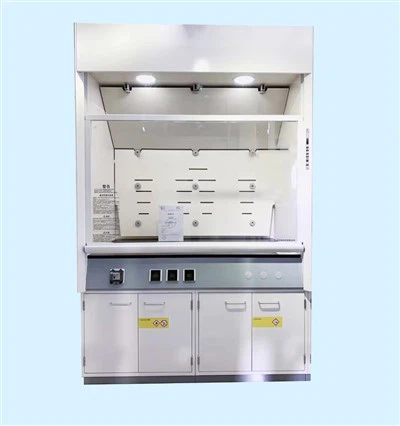
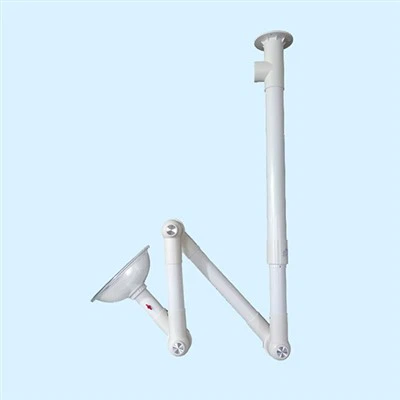
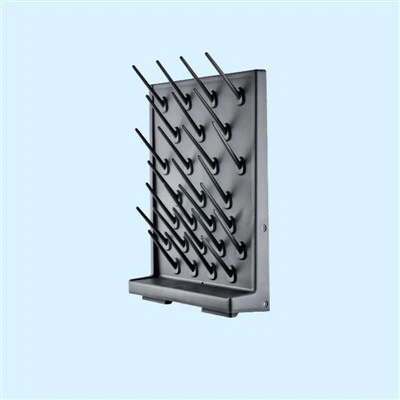
As essential infrastructure in modern scientific research, industrial production, and education, test benches provide a standardized, controllable operating environment for various experiments, testing, and validation activities. By integrating multidisciplinary technologies such as mechanical, electrical, automation, and data acquisition, test benches can simulate real-world operating conditions and quantitatively evaluate product performance, system reliability, or scientific theories. They are key tools for promoting technological innovation and engineering practice.
I. Basic Components and Classifications of Test Benches
The physical structure of a test bench typically consists of four components: a load platform, functional modules, a control system, and auxiliary facilities. The load platform serves as the foundational framework and must meet stability and load requirements. Functional modules are customized based on experimental objectives, such as loading devices in mechanical testing, temperature and humidity control units in environmental testing, and signal generators in electronic testing. The control system coordinates the operation of each module, including sensor networks, actuators, and human-machine interfaces. Auxiliary facilities include power systems, safety devices, and data storage.
Based on application areas, test benches can be divided into three categories: scientific research, engineering verification, and teaching demonstration. Scientific research test benches focus on exploring unknown principles, such as material micro-property test benches and fluid dynamics simulation benches, and are typically equipped with high-precision instruments and customized software. Engineering verification test benches, such as automotive engine durability test benches and avionics compatibility test benches, serve the product development cycle and emphasize high consistency with actual operating conditions. Educational demonstration test benches, often found in university laboratories, prioritize intuitiveness and operational safety, helping students understand the engineering applications of theoretical knowledge.
II. Key Technical Features and Development Trends
Technical upgrades in modern test benches are primarily reflected in three areas: intelligence, modularization, and high precision. Intelligence relies on the Internet of Things (IoT) and edge computing technologies. Distributed sensors are deployed to collect multi-dimensional data (such as vibration frequency, pressure fluctuations, and temperature gradients) in real time, and machine learning algorithms are used to dynamically analyze experimental results and predict faults. Modular design allows users to flexibly combine functional units according to their needs, such as replacing traditional hydraulic loading modules with electric servo modules or expanding wireless communication test interfaces, significantly improving the equipment's reusability and adaptability. High precision is reflected in sensor resolution exceeding the micron level (such as nano-displacement sensors) and control system response times reaching milliseconds, ensuring the reliability and repeatability of experimental data.
Currently, test benches are accelerating their transformation towards digitalization and green development. The introduction of digital twin technology enables the coordinated implementation of virtual and physical testing. By building a digital model of the test object, experimental plans can be rehearsed and parameters optimized in a virtual environment, and the results can then be verified on a physical test bench, significantly shortening the R&D cycle. Furthermore, energy conservation and environmental protection are driving the use of low-energy components (such as variable-frequency motors and LED lighting) and waste heat recovery systems in test benches, reducing power consumption and carbon emissions during operation.
III. Typical Application Scenarios and Value Demonstration
In the industrial sector, test benches are a core component of product quality control. For example, new energy vehicle battery packs require vibration test benches to simulate structural integrity under bumpy road conditions, while high- and low-temperature cycling test benches are used to verify chemical stability in extreme climates. In the aerospace sector, flight control systems must undergo extreme tests of attitude adjustment accuracy on six-degree-of-freedom motion test benches. Research institutions utilize test benches to conduct cutting-edge technological research. For example, quantum devices require ultra-low-temperature vacuum test benches to observe quantum entanglement of microscopic particles, while biomedical engineering relies on cell culture test benches to analyze the biocompatibility of tissue engineering materials.
In the education sector, test benches play a crucial role in fostering practical skills. By operating basic equipment such as mechanical principle demonstration benches and circuit design lab benches, students can translate abstract theoretical formulas into concrete engineering phenomena. For example, they can observe changes in stress distribution by adjusting the support points of a beam structure, or analyze the superposition effect of signals of different frequencies using an oscilloscope. This "learning by doing" model not only enhances students' practical skills but also stimulates their innovative thinking.
Conclusion
As a bridge between theory and practice, the technological advancement of test benches directly impacts the efficiency and quality of scientific and technological innovation. With the deep integration of artificial intelligence, new materials, and advanced manufacturing technologies, future test benches will further develop towards multifunctional integration, remote collaborative control, and full lifecycle management, providing stronger support for global scientific and technological progress and industrial upgrading.